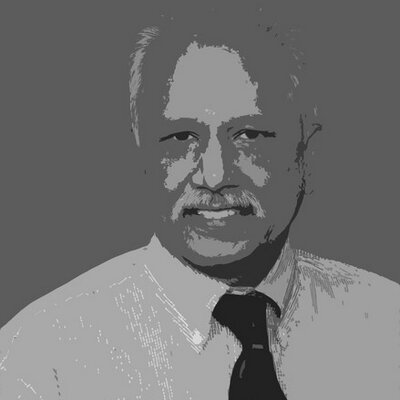
They had four children: Trevor Thamsanqa, Theresa Thandeka, Naomi Nontombi and Mpho Andrea, all of whom attended the Waterford Kamhlaba School in Swaziland. Desmond Tutu is one of South Africa's most well-known human rights activists, winning the 1984 Nobel Peace Prize for his efforts in resolving and ending apartheid. The Nobel Peace Prize 1984, Born: 7 October 1931, Klerksdorp, South Africa, Died: 26 December 2021, Cape Town, South Africa, Residence at the time of the award: [99] As well as his teaching position, he also became the college's Anglican chaplain and the warden of two student residences. [335] In 2007, Tutu accused the church of being obsessed with homosexuality, declaring: "If God, as they say, is homophobic, I wouldn't worship that God. [445] Regarding Reagan, he stated that although he once thought him a "crypto-racist" for his soft stance on the National Party administration, he would "say now that he is a racist pure and simple". Desmond Tutu, South Africa's Nobel Peace winner, dies at 90 [155] In 1981 Tutu also became the rector of St Augustine's Church in Soweto's Orlando West. [420], Tutu was a committed Christian from boyhood. [358], During the 2008 Tibetan unrest, Tutu marched in a pro-Tibet demonstration in San Francisco; there, he called on heads of states to boycott the 2008 Summer Olympics opening ceremony in Beijing "for the sake of the beautiful people of Tibet". During the 1980s he played an unrivaled role in drawing national and international attention to the iniquities of apartheid. [394] She added that he had a "gentle, caring temperament and would have nothing to do with anything that hurt others",[395] commenting on how he had "a quicksilver mind, a disarming honesty". The 1969 Nobel Peace Prize was awarded to the United Nations agency International Labour Organization (founded in 1919) "for creating international legislation insuring certain norms for working conditions in every country." [1] The agency became the ninth organization awarded with a Nobel Prize. Key points: Desmond Tutu died at an aged care home in Cape Town He was diagnosed with prostate cancer more than 20 years ago and had been hospitalised Mourners have been filing past the coffin of Archbishop Desmond Tutu, as his body lies in state at St George's Cathedral in Cape Town, South Africa. In 1966 he obtained an M.A. [379], Tutu died from cancer at the Oasis Frail Care Centre in Cape Town on 26 December 2021, aged 90. Archbishop Desmond Tutu to lie in state in Cape Town for two days. This award is for you. [262] Tutu invited Mandela to attend an Anglican synod of bishops in February 1990, at which the latter described Tutu as the "people's archbishop". Explore prizes and laureates Desmond Tutu's Contribution to Dismantling Apartheid - South Africa Tasked with a mission to manage Alfred Nobel's fortune and hasultimate responsibility for fulfilling the intentions of Nobel's will. [1] His mother, Allen Dorothea Mavoertsek Mathlare, was born to a Motswana family in Boksburg. [111] He nevertheless criticised African theology for failing to sufficiently address contemporary societal problems, and suggested that to correct this it should learn from the black theology tradition. [122] He met with Black Consciousness and Soweto leaders,[123] and shared a platform with anti-apartheid campaigner Winnie Mandela in opposing the government's Terrorism Act, 1967. [229] Over 1,300 people attended his enthronement ceremony at the Cathedral of St George the Martyr on 7 September 1986. Church leaders organised a protest march, and after that too was banned they established the Committee for the Defense of Democracy. [6] Zachariah worked as the principal of a Methodist primary school and the family lived in the mud-brick schoolmaster's house in the yard of the Methodist mission. He was given a Nobel Peace Prize in recognition of his work on nonviolence. [400] He was very punctual,[401] and insisted on punctuality among those in his employ. [401] He was often praised for his public speaking abilities; Du Boulay noted that his "star quality enables him to hold an audience spellbound". Desmond Tutu talks about what makes a good leader, how the Nobel Peace Prize helped the struggle against apartheid in South Africa (08:15), and the key to overcoming present and future conflicts (21:13). [30] He became a server at the church and came under the influence of its priest, Trevor Huddleston;[31] later biographer Shirley du Boulay suggested that Huddleston was "the greatest single influence" in Tutu's life. [170] In March, he embarked on a five-week tour of Europe and North America, meeting politicians including the UN Secretary-General Kurt Waldheim, and addressing the UN Special Committee Against Apartheid. [277] He criticised Mandela on several points, such as his tendency to wear brightly coloured Madiba shirts, which he regarded as inappropriate;[clarification needed] Mandela offered the tongue-in-cheek response that it was ironic coming from a man who wore dresses. [98] He and his wife moved to the UBLS campus; most of his fellow staff members were white expatriates from the US or Britain. [181] The fact that he was "an object of hate" for many was something that deeply pained him.[475]. The TEF's headquarters were in Bromley, with the Tutu family settling in nearby Grove Park, where Tutu became honorary curate of St Augustine's Church. [209] For these militants, Tutu's calls for non-violence were perceived as an obstacle to revolution. Desmond Tutu's laugh was contagious. His fight for freedom was - NPR After President F. W. de Klerk released the anti-apartheid activist Nelson Mandela from prison in 1990 and the pair led negotiations to end apartheid and introduce multi-racial democracy, Tutu assisted as a mediator between rival black factions. Desmond Mpilo Tutu was born on 7 October 1931 in Klerksdorp, Transvaal, South Africa. Watch a video clip of Desmond Tutu receiving his Nobel Peace Prize medal and diploma during the Nobel Peace Prize Award Ceremony at the Oslo City Hall in Norway, 10 December 1984. [163] He and his wife boycotted a lecture given at the Federal Theological Institute by former British Prime Minister Alec Douglas-Home in the 1960s; Tutu noted that they did so because Britain's Conservative Party had "behaved abominably over issues which touched our hearts most nearly". South Africa eventually held its. [7], The Tutus were poor;[8] describing his family, Tutu later related that "although we weren't affluent, we were not destitute either". "[328] Tutu presented the five-volume TRC report to Mandela in a public ceremony in Pretoria in October 1998. [197] Black Anglicans celebrated, although many white Anglicans were angry;[198] some withdrew their diocesan quota in protest. [149] Many of his staff referred to him as "Baba" (father). To cite this section MLA style: Desmond Tutu Biographical. Born in 1931 in Klerksdorp, Transvaal, South Africa, he became the first Black Anglican Archbishop of both Cape Town and Johannesburg. Tutu is an honorary doctor of a number of leading universities in the USA, Britain and Germany. [307] In the United States, he thanked anti-apartheid activists for campaigning for sanctions, also calling for United States companies to now invest in South Africa. Desmond Tutu, South Africa's moral conscience, dies at 90 Archbishop Emeritus Desmond Tutu, the Nobel Peace laureate whose moral might permeated South African society during apartheid's darkest hours and into the unchartered territory of a new democracy, has died, South Africa's presidency said on Sunday. [24] After six months, the duo returned to Roodepoort West, where Tutu resumed his studies at SBS. With the passing of Desmond Tutu, who died in Cape Town at age 90 on December 26, even the last of the three Nobel Peace prize winners linked to the end of apartheid in the 1990s has gone.In 2013, the death of Nelson Mandela hit the global headlines for weeks and his life and times were celebrated with a stadium event to which an unprecedented number of world leaders participated. [200] The first black man to hold the role,[201] he took over the country's largest diocese, comprising 102 parishes and 300,000 parishioners, approximately 80% of whom were black. [247] The death sentences were ultimately commuted. South Africa's government initially refused permission, regarding him with suspicion since the Fort Hare protests, but relented after Tutu argued that his taking the role would be good publicity for South Africa. [252] In August 1989 he helped to organise an "Ecumenical Defiance Service" at St George's Cathedral,[253] and shortly after joined protests at segregated beaches outside Cape Town. Personal Birth date: October 7, 1931 Death date: December 26, 2021 Birth place: Klerksdorp, Transvaal, South Africa [161], After Tutu told journalists that he supported an international economic boycott of South Africa, he was reprimanded before government ministers in October 1979. Our editors will review what youve submitted and determine whether to revise the article. [357] He has also travelled with Elders delegations to Ivory Coast, Cyprus, Ethiopia, India, South Sudan, and the Middle East. [151], As head of the SACC, Tutu's time was dominated by fundraising for the organisation's projects. Sat. [287], Tutu spoke about the IsraeliPalestinian conflict, arguing that Israel's treatment of Palestinians was reminiscent of South African apartheid. [234] He invited the English priest Francis Cull to set up the Institute of Christian Spirituality at Bishopscourt, with the latter moving into a building in the house's grounds. [383] [175] Tutu gained a popular following in the US, where he was often compared to civil rights leader Martin Luther King Jr., although white conservatives like Pat Buchanan and Jerry Falwell lambasted him as an alleged communist sympathiser.[176]. [9] He had an older sister, Sylvia Funeka, who called him "Mpilo" (meaning 'life'). [412] His application of humour included jokes that made a point about apartheid;[413] "the whites think the black people want to drive them into the sea. Desmond Tutu and the Struggle for South Africa's Freedom [157] Although retired archbishops normally return to the position of bishop, the other bishops gave him a new title: "archbishop emeritus". [411] In 1988, Du Boulay described him as "a spokesman for his people, a voice for the voiceless". JOHANNESBURG (AP) Desmond Tutu, South Africa's Nobel Peace Prize-winning icon, an uncompromising foe of apartheid and a modern-day activist for racial justice and LGBT rights, died Sunday at 90. He stated that although he was committed to non-violence and censured all who used violence, he could understand why black Africans became violent when their non-violent tactics had failed to overturn apartheid. He was 90. "You have to understand that the Bible is really a library of books and it has different categories of material", he said. View Archbishop Desmond Tutu in Washington, Nov. 9, 2007. Around 80 percent of its members are black, and they now dominate the leading positions. In 2010, he retired from public life. [341], In 2003, Tutu was the scholar in residence at the University of North Florida. [292] Tutu called for a Palestinian state,[293] and emphasised that his criticisms were of the Israeli government rather than of Jews. Nobel Peace Prize Winner Desmond Tutu Dies At 90 [148] Hegr also developed a new style of leadership, appointing senior staff who were capable of taking the initiative, delegating much of the SACC's detailed work to them, and keeping in touch with them through meetings and memorandums. [499] In 2013, he received the 1.1m (US$1.6m) Templeton Prize for "his life-long work in advancing spiritual principles such as love and forgiveness". Tutu won the 1984 Nobel Peace Prize for "his role as a unifying leader figure in the campaign to resolve the problem of apartheid in South . [221] He also formed a Bishop Tutu Scholarship Fund to financially assist South African students living in exile. 'Moral giant': How the world reacted to Desmond Tutu's death [216] In October 1985, he backed the National Initiative for Reconciliation's proposal for people to refrain from work for a day of prayer, fasting, and mourning. Nobel Peace Prize laureate Archbishop Desmond Tutu checked into a South African hospital Wednesday for treatment of a persistent infection, his foundation announced. This role was internationally recognised by the awarding of the 1984 Nobel Peace Prize. [156] The following year he published a collection of his sermons and speeches, Crying in the Wilderness: The Struggle for Justice in South Africa;[157] another volume, Hope and Suffering, appeared in 1984. MLA style: The Nobel Peace Prize 1984. [67], At KCL, Tutu studied under theologians like Dennis Nineham, Christopher Evans, Sydney Evans, Geoffrey Parrinder, and Eric Mascall. There are many things that you shouldn't accept. [26] Joining a school rugby team, he developed a lifelong love of the sport. [271] Unlike some ANC figures, Tutu never accused de Klerk of personal complicity in this. Desmond Tutu: South Africa anti-apartheid hero dies aged 90 Desmond Tutu is the key architect of reconciliation between black and white South Africans. South Africa holds state funeral for Archbishop Desmond Tutu In 2012, he called for US President George W. Bush and British Prime Minister Tony Blair to be tried by the International Criminal Court for initiating the Iraq War. In 1981 a government commission launched to investigate the issue, headed by the judge C. F. [325] He singled out those victims who expressed forgiveness towards those who had harmed them and used these individuals as his leitmotif. Desmond Tutu's long history of fighting for lesbian and gay rights [2] His father, Zachariah Zelilo Tutu, was from the amaFengu branch of Xhosa and grew up in Gcuwa, Eastern Cape. [387] Following the funeral, Tutu's remains were to be aquamated; his ashes are interred in St. George's Cathedral.[388]. Before the speech, Desmond Tutu and his relatives and colleagues delivered a traditional song. [124] He held a 24-hour vigil for racial harmony at the cathedral where he prayed for activists detained under the act. Nobel Prize Outreach AB 2023. "[322] Tutu opened meetings with prayers and often referred to Christian teachings when discussing the TRC's work, frustrating some who saw him as incorporating too many religious elements into an expressly secular body. [131] In July, Bill Burnett consecrated Tutu as a bishop at St Mary's Cathedral. [75], Tutu then secured a TEF grant to study for a master's degree,[76] doing so from October 1965 until September 1966, completing his dissertation on Islam in West Africa. The cleric and social activist, who was described by South Africans and admirers . [228] He was the first black man to hold the post. Desmond Mpilo Tutu OMSG CH GCStJ (7 October 1931 26 December 2021) was a South African Anglican bishop and theologian, known for his work as an anti-apartheid and human rights activist. Shirley du Boulay on Tutu's personality[389], Shirley Du Boulay noted that Tutu was "a man of many layers" and "contradictory tensions". [127] Tutu was upset by what he regarded as the lack of outrage from white South Africans; he raised the issue in his Sunday sermon, stating that the white silence was "deafening" and asking if they would have shown the same nonchalance had white youths been killed. [144] Leah gained employment as the assistant director of the Institute of Race Relations. Desmond Tutu hospitalised - Bulawayo24 News [348], In 2004, he gave the inaugural lecture at the Church of Christ the King, where he commended the achievements made in South Africa over the previous decade although warned of widening wealth disparity among its population. [317], Mandela named Tutu as the chair of the TRC, with Boraine as his deputy. [225] Some white Anglicans left the church in protest. [185], In 1984, Tutu embarked on a three-month sabbatical at the General Theological Seminary of the Episcopal Church in New York. [172] On his return to South Africa, Botha again ordered Tutu's passport confiscated, preventing him from personally collecting several further honorary degrees. [237] In church meetings, Tutu drew upon traditional African custom by adopting a consensus-building model of leadership, seeking to ensure that competing groups in the church reached a compromise and thus all votes would be unanimous rather than divided. Their work and discoveries range from paleogenomics and click chemistry to documenting war crimes. [62] In 1962, Tutu was transferred to St Philip's Church in Thokoza, where he was placed in charge of the congregation and developed a passion for pastoral ministry. Look for popular awards and laureates in different fields, and discover the history of the Nobel Prize. [97] This brought him closer to his children and offered twice the salary he earned at Fedsem. ", Maluleke, Tinyiko. Desmond Mpilo Tutu was born on 7 October 1931 in Klerksdorp, Transvaal, South Africa. To cite this section [230] Desmond Tutu hospitalised. Corrections? [190] Tutu later called Reagan "a racist pure and simple". This autobiography/biography was written [108], During the early 1970s, Tutu's theology changed due to his experiences in Africa and his discovery of liberation theology. The Nobel Peace Prize 1984 was awarded to Desmond Mpilo Tutu "for his role as a unifying leader figure in the non-violent campaign to resolve the problem of apartheid in South Africa" To cite this section MLA style: The Nobel Peace Prize 1984. Eat or be eaten. MLA style: Desmond Tutu Facts. [224], After Philip Russell announced his retirement as the Archbishop of Cape Town,[225] in February 1986 the Black Solidarity Group formed a plan to get Tutu appointed as his replacement. [452] Tutu often used the aphorism that "African communism" is an oxymoron becausein his viewAfricans are intrinsically spiritual and this conflicts with the atheistic nature of Marxism. [422] He read the Bible every day[423] and recommended that people read it as a collection of books, not a single constitutional document: [179] Tutu angered much of South Africa's press and white minority,[180] especially apartheid supporters. In May 1985 he embarked on a speaking tour of the United States,[219] and in October 1985 addressed the political committee of the United Nations General Assembly, urging the international community to impose sanctions on South Africa if apartheid was not dismantled within six months. [284] In 1995, Mandela sent Tutu to Nigeria to meet with military leader Sani Abacha to request the release of imprisoned politicians Moshood Abiola and Olusegun Obasanjo. The outspoken Tutu was considered the nation's conscience by both Black and white, an enduring testament to his faith and spirit of reconciliation in a divided nation. [422] He was even known to often pray while driving. [467] As part of this, he believed that the perpetrators and beneficiaries of apartheid must admit to their actions but that the system's victims should respond generously, stating that it was a "gospel imperative" to forgive. He believed that both theological approaches had arisen in contexts where black humanity had been defined in terms of white norms and values, in societies where "to be really human", the black man "had to see himself and to be seen as a chocolate coloured white man". Here's a look at the life of Nobel Peace Prize winner Archbishop Desmond Tutu.. Malala's activism did little to endear her to hardcore fundamentalists. [446] Later in life, he also spoke out against various African leaders, for instance describing Zimbabwe's Robert Mugabe as the "caricature of an African dictator", who had "gone bonkers in a big way". I mean, maybe it's the awful face of capitalism, but I haven't seen the other face. Desmond Tutu - Biographical - NobelPrize.org He emerged as one of the most prominent opponents of South Africa's apartheid system of racial segregation and white minority rule. [202] In his inaugural sermon, Tutu called on the international community to introduce economic sanctions against South Africa unless apartheid was not being dismantled within 18 to 24 months. Sell now. South African. Desmond Tutu, anti-apartheid icon who won the Nobel Prize, dies at 90 During South Africas moves toward democracy in the early 1990s, Tutu propagated the idea of South Africa as the Rainbow Nation, and he continued to comment on events with varying combinations of trenchancy and humour. [217] He also proposed a national strike against apartheid, angering trade unions whom he had not consulted beforehand. [444] In the 1980s, Tutu also condemned Western political leaders, namely Ronald Reagan, Margaret Thatcher, and West Germany's Helmut Kohl, for retaining links with the South African government, stipulating that "support of this racist policy is racist". [49] Tutu was admitted to St Peter's Theological College in Rosettenville, Johannesburg, which was run by the Anglican Community of the Resurrection. Desmond Tutu | Biography, Facts, & Nobel Peace Prize [452] This hostility was exacerbated by the government's campaign to discredit Tutu and distort his image,[479] which included repeatedly misquoting him to present his statements out of context. I am as passionate about this campaign as I ever was about apartheid. [249] Traffic police briefly imprisoned Leah when she was late to renew her motor vehicle license. Nobel Prize Outreach AB 2023. He was appointed dean of St. Marys Cathedral in Johannesburg in 1975, the first Black South African to hold that position. [96], In January 1970, Tutu left the seminary for a teaching post at the University of Botswana, Lesotho and Swaziland (UBLS) in Roma, Lesotho. [308], Tutu popularised the term "Rainbow Nation" as a metaphor for post-apartheid South Africa after 1994 under ANC rule. He was honoured for his efforts to dismantle the oppressive rule in South Africa. Desmond Tutu, Anti-Apartheid Hero and Nobel Prize Winner, Dies - Slate [290] Desmond Tutu, the Nobel Prize-winning South African cleric who became the voice of the fight against the institutional segregation of apartheid, has died at the age of 90. [241] In February 1988, the government banned 17 black or multi-racial organisations, including the UDF, and restricted the activities of trade unions. . He headed the Truth and Reconciliation Commission, which was intended to help heal the country by investigating human rights violations that had occurred during the apartheid era. They're just ordinary people who are scared. [93] In August 1968, he gave a sermon comparing South Africa's situation with that in the Eastern Bloc, likening anti-apartheid protests to the recent Prague Spring. [168] Although some clergy saw this dialogue as pointless, Tutu disagreed, commenting: "Moses went to Pharaoh repeatedly to secure the release of the Israelites. [208] Tutu angered some black South Africans by speaking against the torture and killing of suspected collaborators.
desmond tutu nobel peace prize
desmond tutu nobel peace prize
List
desmond tutu nobel peace prize
desmond tutu nobel peace prize Posts
terrence k williams accident
April 4th, 2023
desmond tutu nobel peace prize
They had four children: Trevor Thamsanqa, Theresa Thandeka, Naomi Nontombi and Mpho Andrea, all of whom attended the Waterford Kamhlaba School in Swaziland. Desmond Tutu is one of South Africa's most well-known human rights activists, winning the 1984 Nobel Peace Prize for his efforts in resolving and ending apartheid. The Nobel Peace Prize 1984, Born: 7 October 1931, Klerksdorp, South Africa, Died: 26 December 2021, Cape Town, South Africa, Residence at the time of the award: [99] As well as his teaching position, he also became the college's Anglican chaplain and the warden of two student residences. [335] In 2007, Tutu accused the church of being obsessed with homosexuality, declaring: "If God, as they say, is homophobic, I wouldn't worship that God. [445] Regarding Reagan, he stated that although he once thought him a "crypto-racist" for his soft stance on the National Party administration, he would "say now that he is a racist pure and simple". Desmond Tutu, South Africa's Nobel Peace winner, dies at 90 [155] In 1981 Tutu also became the rector of St Augustine's Church in Soweto's Orlando West. [420], Tutu was a committed Christian from boyhood. [358], During the 2008 Tibetan unrest, Tutu marched in a pro-Tibet demonstration in San Francisco; there, he called on heads of states to boycott the 2008 Summer Olympics opening ceremony in Beijing "for the sake of the beautiful people of Tibet". During the 1980s he played an unrivaled role in drawing national and international attention to the iniquities of apartheid. [394] She added that he had a "gentle, caring temperament and would have nothing to do with anything that hurt others",[395] commenting on how he had "a quicksilver mind, a disarming honesty". The 1969 Nobel Peace Prize was awarded to the United Nations agency International Labour Organization (founded in 1919) "for creating international legislation insuring certain norms for working conditions in every country." [1] The agency became the ninth organization awarded with a Nobel Prize. Key points: Desmond Tutu died at an aged care home in Cape Town He was diagnosed with prostate cancer more than 20 years ago and had been hospitalised Mourners have been filing past the coffin of Archbishop Desmond Tutu, as his body lies in state at St George's Cathedral in Cape Town, South Africa. In 1966 he obtained an M.A. [379], Tutu died from cancer at the Oasis Frail Care Centre in Cape Town on 26 December 2021, aged 90. Archbishop Desmond Tutu to lie in state in Cape Town for two days. This award is for you. [262] Tutu invited Mandela to attend an Anglican synod of bishops in February 1990, at which the latter described Tutu as the "people's archbishop". Explore prizes and laureates Desmond Tutu's Contribution to Dismantling Apartheid - South Africa Tasked with a mission to manage Alfred Nobel's fortune and hasultimate responsibility for fulfilling the intentions of Nobel's will. [1] His mother, Allen Dorothea Mavoertsek Mathlare, was born to a Motswana family in Boksburg. [111] He nevertheless criticised African theology for failing to sufficiently address contemporary societal problems, and suggested that to correct this it should learn from the black theology tradition. [122] He met with Black Consciousness and Soweto leaders,[123] and shared a platform with anti-apartheid campaigner Winnie Mandela in opposing the government's Terrorism Act, 1967. [229] Over 1,300 people attended his enthronement ceremony at the Cathedral of St George the Martyr on 7 September 1986. Church leaders organised a protest march, and after that too was banned they established the Committee for the Defense of Democracy. [6] Zachariah worked as the principal of a Methodist primary school and the family lived in the mud-brick schoolmaster's house in the yard of the Methodist mission. He was given a Nobel Peace Prize in recognition of his work on nonviolence. [400] He was very punctual,[401] and insisted on punctuality among those in his employ. [401] He was often praised for his public speaking abilities; Du Boulay noted that his "star quality enables him to hold an audience spellbound". Desmond Tutu talks about what makes a good leader, how the Nobel Peace Prize helped the struggle against apartheid in South Africa (08:15), and the key to overcoming present and future conflicts (21:13). [30] He became a server at the church and came under the influence of its priest, Trevor Huddleston;[31] later biographer Shirley du Boulay suggested that Huddleston was "the greatest single influence" in Tutu's life. [170] In March, he embarked on a five-week tour of Europe and North America, meeting politicians including the UN Secretary-General Kurt Waldheim, and addressing the UN Special Committee Against Apartheid. [277] He criticised Mandela on several points, such as his tendency to wear brightly coloured Madiba shirts, which he regarded as inappropriate;[clarification needed] Mandela offered the tongue-in-cheek response that it was ironic coming from a man who wore dresses. [98] He and his wife moved to the UBLS campus; most of his fellow staff members were white expatriates from the US or Britain. [181] The fact that he was "an object of hate" for many was something that deeply pained him.[475]. The TEF's headquarters were in Bromley, with the Tutu family settling in nearby Grove Park, where Tutu became honorary curate of St Augustine's Church. [209] For these militants, Tutu's calls for non-violence were perceived as an obstacle to revolution. Desmond Tutu's laugh was contagious. His fight for freedom was - NPR After President F. W. de Klerk released the anti-apartheid activist Nelson Mandela from prison in 1990 and the pair led negotiations to end apartheid and introduce multi-racial democracy, Tutu assisted as a mediator between rival black factions. Desmond Mpilo Tutu was born on 7 October 1931 in Klerksdorp, Transvaal, South Africa. Watch a video clip of Desmond Tutu receiving his Nobel Peace Prize medal and diploma during the Nobel Peace Prize Award Ceremony at the Oslo City Hall in Norway, 10 December 1984. [163] He and his wife boycotted a lecture given at the Federal Theological Institute by former British Prime Minister Alec Douglas-Home in the 1960s; Tutu noted that they did so because Britain's Conservative Party had "behaved abominably over issues which touched our hearts most nearly". South Africa eventually held its. [7], The Tutus were poor;[8] describing his family, Tutu later related that "although we weren't affluent, we were not destitute either". "[328] Tutu presented the five-volume TRC report to Mandela in a public ceremony in Pretoria in October 1998. [197] Black Anglicans celebrated, although many white Anglicans were angry;[198] some withdrew their diocesan quota in protest. [149] Many of his staff referred to him as "Baba" (father). To cite this section MLA style: Desmond Tutu Biographical. Born in 1931 in Klerksdorp, Transvaal, South Africa, he became the first Black Anglican Archbishop of both Cape Town and Johannesburg. Tutu is an honorary doctor of a number of leading universities in the USA, Britain and Germany. [307] In the United States, he thanked anti-apartheid activists for campaigning for sanctions, also calling for United States companies to now invest in South Africa. Desmond Tutu, South Africa's moral conscience, dies at 90 Archbishop Emeritus Desmond Tutu, the Nobel Peace laureate whose moral might permeated South African society during apartheid's darkest hours and into the unchartered territory of a new democracy, has died, South Africa's presidency said on Sunday. [24] After six months, the duo returned to Roodepoort West, where Tutu resumed his studies at SBS. With the passing of Desmond Tutu, who died in Cape Town at age 90 on December 26, even the last of the three Nobel Peace prize winners linked to the end of apartheid in the 1990s has gone.In 2013, the death of Nelson Mandela hit the global headlines for weeks and his life and times were celebrated with a stadium event to which an unprecedented number of world leaders participated. [200] The first black man to hold the role,[201] he took over the country's largest diocese, comprising 102 parishes and 300,000 parishioners, approximately 80% of whom were black. [247] The death sentences were ultimately commuted. South Africa's government initially refused permission, regarding him with suspicion since the Fort Hare protests, but relented after Tutu argued that his taking the role would be good publicity for South Africa. [252] In August 1989 he helped to organise an "Ecumenical Defiance Service" at St George's Cathedral,[253] and shortly after joined protests at segregated beaches outside Cape Town. Personal Birth date: October 7, 1931 Death date: December 26, 2021 Birth place: Klerksdorp, Transvaal, South Africa [161], After Tutu told journalists that he supported an international economic boycott of South Africa, he was reprimanded before government ministers in October 1979. Our editors will review what youve submitted and determine whether to revise the article. [357] He has also travelled with Elders delegations to Ivory Coast, Cyprus, Ethiopia, India, South Sudan, and the Middle East. [151], As head of the SACC, Tutu's time was dominated by fundraising for the organisation's projects. Sat. [287], Tutu spoke about the IsraeliPalestinian conflict, arguing that Israel's treatment of Palestinians was reminiscent of South African apartheid. [234] He invited the English priest Francis Cull to set up the Institute of Christian Spirituality at Bishopscourt, with the latter moving into a building in the house's grounds. [383] [175] Tutu gained a popular following in the US, where he was often compared to civil rights leader Martin Luther King Jr., although white conservatives like Pat Buchanan and Jerry Falwell lambasted him as an alleged communist sympathiser.[176]. [9] He had an older sister, Sylvia Funeka, who called him "Mpilo" (meaning 'life'). [412] His application of humour included jokes that made a point about apartheid;[413] "the whites think the black people want to drive them into the sea. Desmond Tutu and the Struggle for South Africa's Freedom [157] Although retired archbishops normally return to the position of bishop, the other bishops gave him a new title: "archbishop emeritus". [411] In 1988, Du Boulay described him as "a spokesman for his people, a voice for the voiceless". JOHANNESBURG (AP) Desmond Tutu, South Africa's Nobel Peace Prize-winning icon, an uncompromising foe of apartheid and a modern-day activist for racial justice and LGBT rights, died Sunday at 90. He stated that although he was committed to non-violence and censured all who used violence, he could understand why black Africans became violent when their non-violent tactics had failed to overturn apartheid. He was 90. "You have to understand that the Bible is really a library of books and it has different categories of material", he said. View Archbishop Desmond Tutu in Washington, Nov. 9, 2007. Around 80 percent of its members are black, and they now dominate the leading positions. In 2010, he retired from public life. [341], In 2003, Tutu was the scholar in residence at the University of North Florida. [292] Tutu called for a Palestinian state,[293] and emphasised that his criticisms were of the Israeli government rather than of Jews. Nobel Peace Prize Winner Desmond Tutu Dies At 90 [148] Hegr also developed a new style of leadership, appointing senior staff who were capable of taking the initiative, delegating much of the SACC's detailed work to them, and keeping in touch with them through meetings and memorandums. [499] In 2013, he received the 1.1m (US$1.6m) Templeton Prize for "his life-long work in advancing spiritual principles such as love and forgiveness". Tutu won the 1984 Nobel Peace Prize for "his role as a unifying leader figure in the campaign to resolve the problem of apartheid in South . [221] He also formed a Bishop Tutu Scholarship Fund to financially assist South African students living in exile. 'Moral giant': How the world reacted to Desmond Tutu's death [216] In October 1985, he backed the National Initiative for Reconciliation's proposal for people to refrain from work for a day of prayer, fasting, and mourning. Nobel Peace Prize laureate Archbishop Desmond Tutu checked into a South African hospital Wednesday for treatment of a persistent infection, his foundation announced. This role was internationally recognised by the awarding of the 1984 Nobel Peace Prize. [156] The following year he published a collection of his sermons and speeches, Crying in the Wilderness: The Struggle for Justice in South Africa;[157] another volume, Hope and Suffering, appeared in 1984. MLA style: The Nobel Peace Prize 1984. [67], At KCL, Tutu studied under theologians like Dennis Nineham, Christopher Evans, Sydney Evans, Geoffrey Parrinder, and Eric Mascall. There are many things that you shouldn't accept. [26] Joining a school rugby team, he developed a lifelong love of the sport. [271] Unlike some ANC figures, Tutu never accused de Klerk of personal complicity in this. Desmond Tutu: South Africa anti-apartheid hero dies aged 90 Desmond Tutu is the key architect of reconciliation between black and white South Africans. South Africa holds state funeral for Archbishop Desmond Tutu In 2012, he called for US President George W. Bush and British Prime Minister Tony Blair to be tried by the International Criminal Court for initiating the Iraq War. In 1981 a government commission launched to investigate the issue, headed by the judge C. F. [325] He singled out those victims who expressed forgiveness towards those who had harmed them and used these individuals as his leitmotif. Desmond Tutu's long history of fighting for lesbian and gay rights [2] His father, Zachariah Zelilo Tutu, was from the amaFengu branch of Xhosa and grew up in Gcuwa, Eastern Cape. [387] Following the funeral, Tutu's remains were to be aquamated; his ashes are interred in St. George's Cathedral.[388]. Before the speech, Desmond Tutu and his relatives and colleagues delivered a traditional song. [124] He held a 24-hour vigil for racial harmony at the cathedral where he prayed for activists detained under the act. Nobel Prize Outreach AB 2023. "[322] Tutu opened meetings with prayers and often referred to Christian teachings when discussing the TRC's work, frustrating some who saw him as incorporating too many religious elements into an expressly secular body. [131] In July, Bill Burnett consecrated Tutu as a bishop at St Mary's Cathedral. [75], Tutu then secured a TEF grant to study for a master's degree,[76] doing so from October 1965 until September 1966, completing his dissertation on Islam in West Africa. The cleric and social activist, who was described by South Africans and admirers . [228] He was the first black man to hold the post. Desmond Mpilo Tutu OMSG CH GCStJ (7 October 1931 26 December 2021) was a South African Anglican bishop and theologian, known for his work as an anti-apartheid and human rights activist. Shirley du Boulay on Tutu's personality[389], Shirley Du Boulay noted that Tutu was "a man of many layers" and "contradictory tensions". [127] Tutu was upset by what he regarded as the lack of outrage from white South Africans; he raised the issue in his Sunday sermon, stating that the white silence was "deafening" and asking if they would have shown the same nonchalance had white youths been killed. [144] Leah gained employment as the assistant director of the Institute of Race Relations. Desmond Tutu hospitalised - Bulawayo24 News [348], In 2004, he gave the inaugural lecture at the Church of Christ the King, where he commended the achievements made in South Africa over the previous decade although warned of widening wealth disparity among its population. [317], Mandela named Tutu as the chair of the TRC, with Boraine as his deputy. [225] Some white Anglicans left the church in protest. [185], In 1984, Tutu embarked on a three-month sabbatical at the General Theological Seminary of the Episcopal Church in New York. [172] On his return to South Africa, Botha again ordered Tutu's passport confiscated, preventing him from personally collecting several further honorary degrees. [237] In church meetings, Tutu drew upon traditional African custom by adopting a consensus-building model of leadership, seeking to ensure that competing groups in the church reached a compromise and thus all votes would be unanimous rather than divided. Their work and discoveries range from paleogenomics and click chemistry to documenting war crimes. [62] In 1962, Tutu was transferred to St Philip's Church in Thokoza, where he was placed in charge of the congregation and developed a passion for pastoral ministry. Look for popular awards and laureates in different fields, and discover the history of the Nobel Prize. [97] This brought him closer to his children and offered twice the salary he earned at Fedsem. ", Maluleke, Tinyiko. Desmond Mpilo Tutu was born on 7 October 1931 in Klerksdorp, Transvaal, South Africa. To cite this section [230] Desmond Tutu hospitalised. Corrections? [190] Tutu later called Reagan "a racist pure and simple". This autobiography/biography was written [108], During the early 1970s, Tutu's theology changed due to his experiences in Africa and his discovery of liberation theology. The Nobel Peace Prize 1984 was awarded to Desmond Mpilo Tutu "for his role as a unifying leader figure in the non-violent campaign to resolve the problem of apartheid in South Africa" To cite this section MLA style: The Nobel Peace Prize 1984. Eat or be eaten. MLA style: Desmond Tutu Facts. [224], After Philip Russell announced his retirement as the Archbishop of Cape Town,[225] in February 1986 the Black Solidarity Group formed a plan to get Tutu appointed as his replacement. [452] Tutu often used the aphorism that "African communism" is an oxymoron becausein his viewAfricans are intrinsically spiritual and this conflicts with the atheistic nature of Marxism. [422] He read the Bible every day[423] and recommended that people read it as a collection of books, not a single constitutional document: [179] Tutu angered much of South Africa's press and white minority,[180] especially apartheid supporters. In May 1985 he embarked on a speaking tour of the United States,[219] and in October 1985 addressed the political committee of the United Nations General Assembly, urging the international community to impose sanctions on South Africa if apartheid was not dismantled within six months. [284] In 1995, Mandela sent Tutu to Nigeria to meet with military leader Sani Abacha to request the release of imprisoned politicians Moshood Abiola and Olusegun Obasanjo. The outspoken Tutu was considered the nation's conscience by both Black and white, an enduring testament to his faith and spirit of reconciliation in a divided nation. [422] He was even known to often pray while driving. [467] As part of this, he believed that the perpetrators and beneficiaries of apartheid must admit to their actions but that the system's victims should respond generously, stating that it was a "gospel imperative" to forgive. He believed that both theological approaches had arisen in contexts where black humanity had been defined in terms of white norms and values, in societies where "to be really human", the black man "had to see himself and to be seen as a chocolate coloured white man". Here's a look at the life of Nobel Peace Prize winner Archbishop Desmond Tutu.. Malala's activism did little to endear her to hardcore fundamentalists. [446] Later in life, he also spoke out against various African leaders, for instance describing Zimbabwe's Robert Mugabe as the "caricature of an African dictator", who had "gone bonkers in a big way". I mean, maybe it's the awful face of capitalism, but I haven't seen the other face. Desmond Tutu - Biographical - NobelPrize.org He emerged as one of the most prominent opponents of South Africa's apartheid system of racial segregation and white minority rule. [202] In his inaugural sermon, Tutu called on the international community to introduce economic sanctions against South Africa unless apartheid was not being dismantled within 18 to 24 months. Sell now. South African. Desmond Tutu, anti-apartheid icon who won the Nobel Prize, dies at 90 During South Africas moves toward democracy in the early 1990s, Tutu propagated the idea of South Africa as the Rainbow Nation, and he continued to comment on events with varying combinations of trenchancy and humour. [217] He also proposed a national strike against apartheid, angering trade unions whom he had not consulted beforehand. [444] In the 1980s, Tutu also condemned Western political leaders, namely Ronald Reagan, Margaret Thatcher, and West Germany's Helmut Kohl, for retaining links with the South African government, stipulating that "support of this racist policy is racist". [49] Tutu was admitted to St Peter's Theological College in Rosettenville, Johannesburg, which was run by the Anglican Community of the Resurrection. Desmond Tutu | Biography, Facts, & Nobel Peace Prize [452] This hostility was exacerbated by the government's campaign to discredit Tutu and distort his image,[479] which included repeatedly misquoting him to present his statements out of context. I am as passionate about this campaign as I ever was about apartheid. [249] Traffic police briefly imprisoned Leah when she was late to renew her motor vehicle license. Nobel Prize Outreach AB 2023. He was appointed dean of St. Marys Cathedral in Johannesburg in 1975, the first Black South African to hold that position. [96], In January 1970, Tutu left the seminary for a teaching post at the University of Botswana, Lesotho and Swaziland (UBLS) in Roma, Lesotho. [308], Tutu popularised the term "Rainbow Nation" as a metaphor for post-apartheid South Africa after 1994 under ANC rule. He was honoured for his efforts to dismantle the oppressive rule in South Africa. Desmond Tutu, Anti-Apartheid Hero and Nobel Prize Winner, Dies - Slate [290] Desmond Tutu, the Nobel Prize-winning South African cleric who became the voice of the fight against the institutional segregation of apartheid, has died at the age of 90. [241] In February 1988, the government banned 17 black or multi-racial organisations, including the UDF, and restricted the activities of trade unions. . He headed the Truth and Reconciliation Commission, which was intended to help heal the country by investigating human rights violations that had occurred during the apartheid era. They're just ordinary people who are scared. [93] In August 1968, he gave a sermon comparing South Africa's situation with that in the Eastern Bloc, likening anti-apartheid protests to the recent Prague Spring. [168] Although some clergy saw this dialogue as pointless, Tutu disagreed, commenting: "Moses went to Pharaoh repeatedly to secure the release of the Israelites. [208] Tutu angered some black South Africans by speaking against the torture and killing of suspected collaborators. Nova Marvel Casting Call,
Jerry Butler Obituary,
Articles D
desmond tutu nobel peace prize